



What Does It Really Take to Make Ends Meet in California?
We all know that prices are going up—but how does this impact families in California? That’s where the Real Cost Measure comes in. It’s a more accurate way to understand what it takes for families to meet their basic needs—things like housing, food, child care, health care, transportation, and taxes.
Right now, the federal government uses a formula developed in the 1960s to calculate the Federal Poverty Level (FPL). It’s based on the cost of a bare-bones food budget, multiplied by three.
That’s it.
It doesn’t account for skyrocketing housing costs, child care, or the realities of modern life. In fact, it assumes food is a family’s biggest expense—which hasn’t been true for decades.
That’s why the Real Cost Measure paints a much clearer picture. It’s grounded in real data and reflects what families actually spend to live and work in California today.
In the Greater Sacramento area, 29% of families are living below this more realistic threshold. That means nearly 1 in 3 households are working—often full-time—but still can’t afford the basics. And for families with young children, the challenge is even greater.
That’s why United Ways of California created this interactive tool. It’s designed to help you:
- See how much income a household needs based on size and location
- Compare costs across counties
- Understand how factors like child care and housing impact a family’s budget
- Advocate for policies that reflect the real cost of living
👉 Try it out below and see what it takes to truly make ends meet in your part of California.
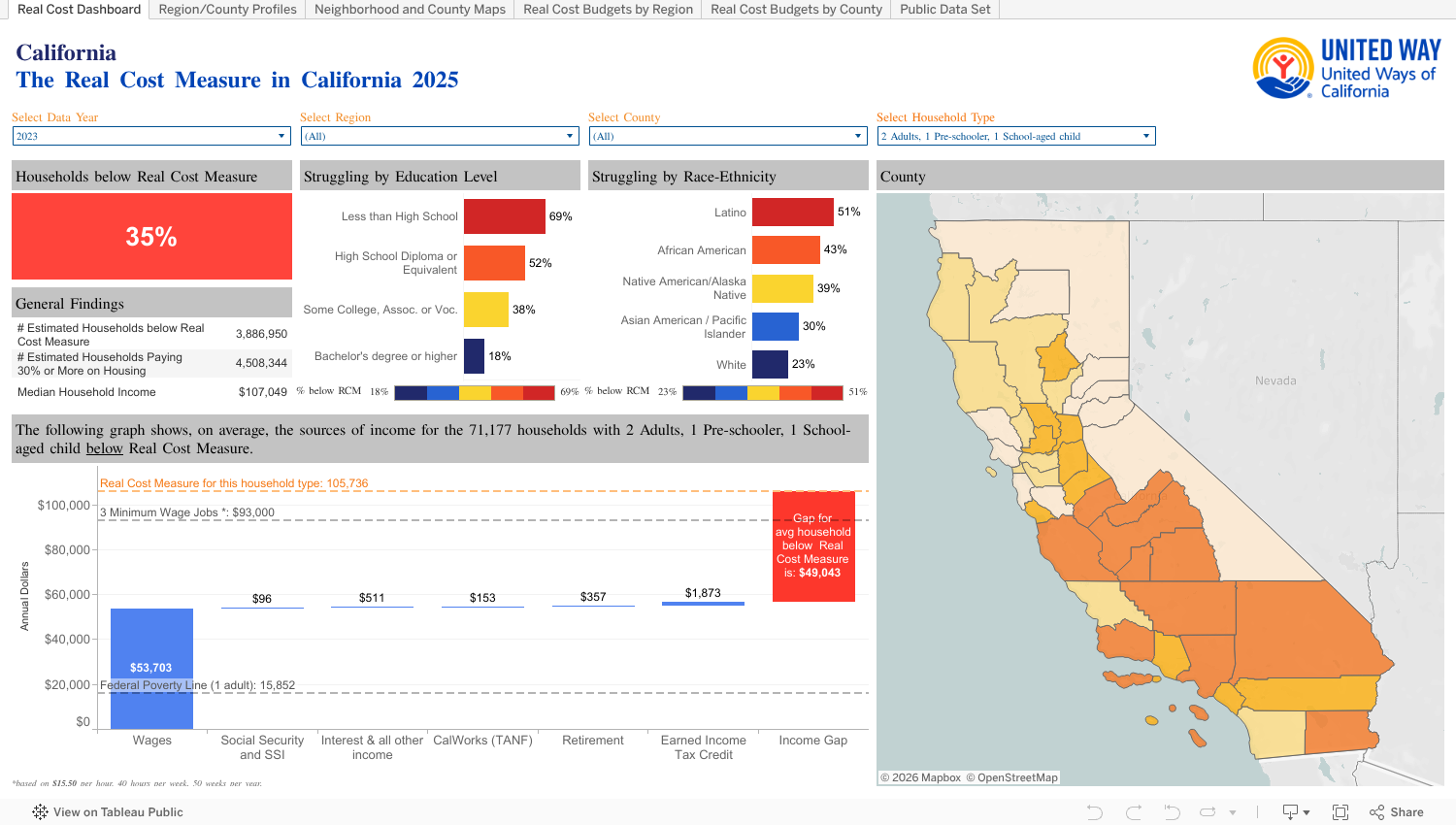
Learn more by visiting United Ways of California at unitedwaysca.org/realcost.